An Oyster Without a Pearl
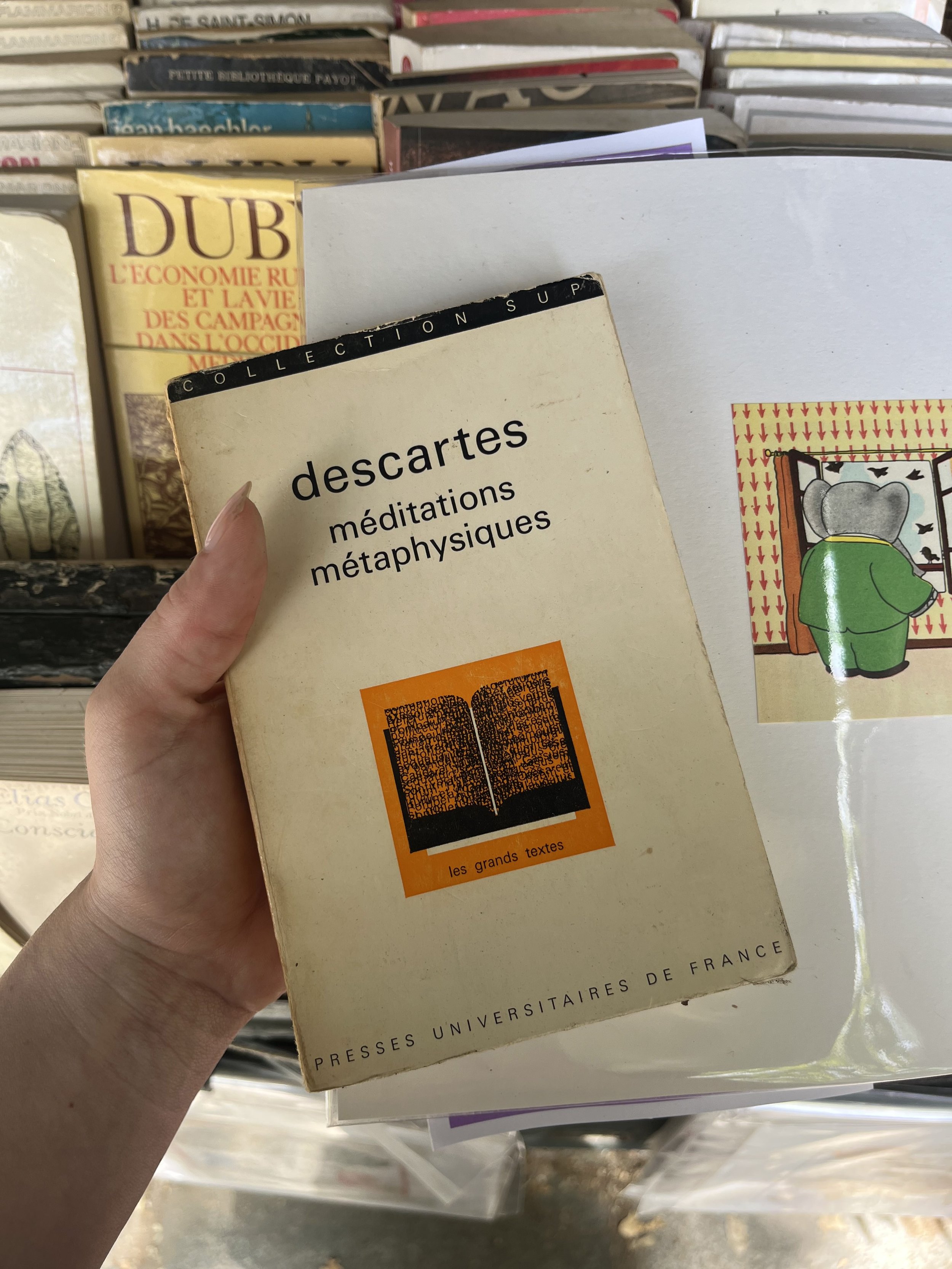
Descartes said: I think, therefore I am. The only thing he could be certain of was that it was he who was thinking. There would therefore exist an “I” that remains the same in thought. In this classical model, which in many ways we still continue to inherit, the self is the place where everything meets and holds together.
When I became pregnant, I had heard much about the physical strain it would entail: hormonal shifts, exhaustion, ups and downs. But no one had prepared me for the existential crisis it would involve, nor for the total cracking of the body’s inner and outer boundaries. This experience is not simply a journey of temporary fluctuations occurring as an exception in life’s ongoing flow. It changes life from the inside out, or perhaps from the outside in, I have not yet figured that out. And Descartes’ model of the human being collapses as self-evidently as it once secured its place within phenomenology.
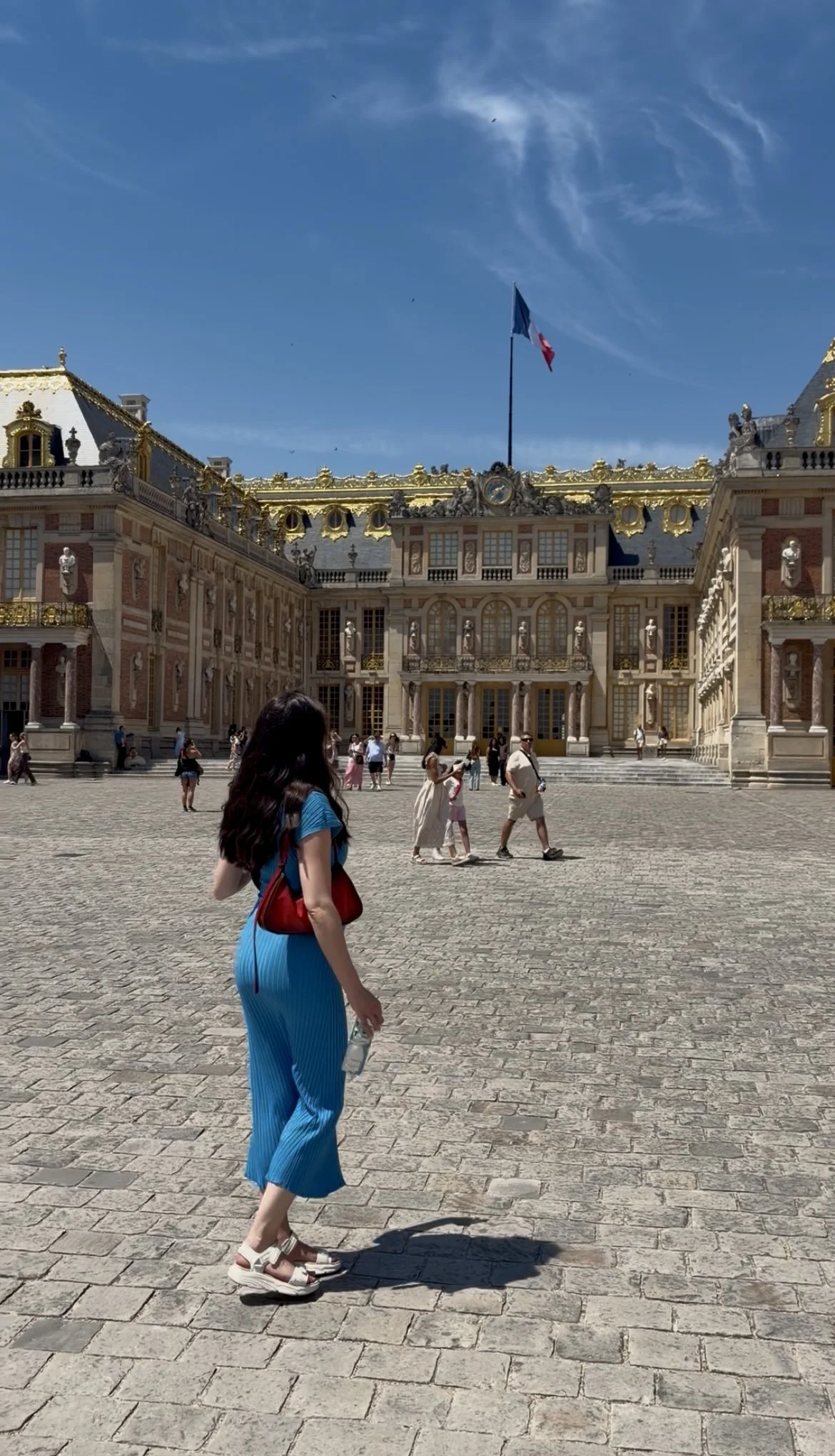
I travelled alone to Paris. Or rather: I and the fetus in my womb. Not even the city’s pace and new views could distract me from the strange new feeling I carried. This trip was not like my earlier journey to Barcelona the same year. There, I was not pregnant. I was lighter, eager, and freer in another way. I felt as if I was carried by the world. There was a clear self and a clear direction.
In Paris, I felt more like the image of the fetus on the ultrasound: an astronaut in space who had not yet found her footing.
It is an absurd feeling, carrying someone else inside you. One is neither one nor two. One becomes something third, for which philosophy has no language. I felt vulnerable, as if anything at all could reach me.
During the first and second days, the anxiety and unease were most present. If I was outside, I wanted to go back in, to draw or write. The studio became my shell. Outside it, I was like a turtle without its protection, naked and skin-close to the world. At the same time, I did not want to be alone with my thoughts. They searched ceaselessly for something that could ease the feeling of no longer knowing who one is, and who one is in the process of becoming.
That anxiety was not new. A few weeks earlier it had arrived in full force. For two weeks I moved between anguish and what was called “normal.” I was told it was hormonal changes, that it was “nothing strange.” But for me, a lover of words, it was precisely strange not to be able to formulate what I was feeling. And frustration grew at the thought that no one else could understand it either.
The midwife referred me to a psychotherapist. It was then that I became curious about what cultural and institutional support actually exists for such an experience. I discovered quickly that it was insufficient. I had to search for answers elsewhere.
I simply could not accept being told that I “had nothing to worry about,” that this was just a wave to ride through. My need to understand was not satisfied by the answers I had been given. To merely let it pass as comfortably as possible also risked missing something unexpected and important. Something that was itself searching for its own image and language.
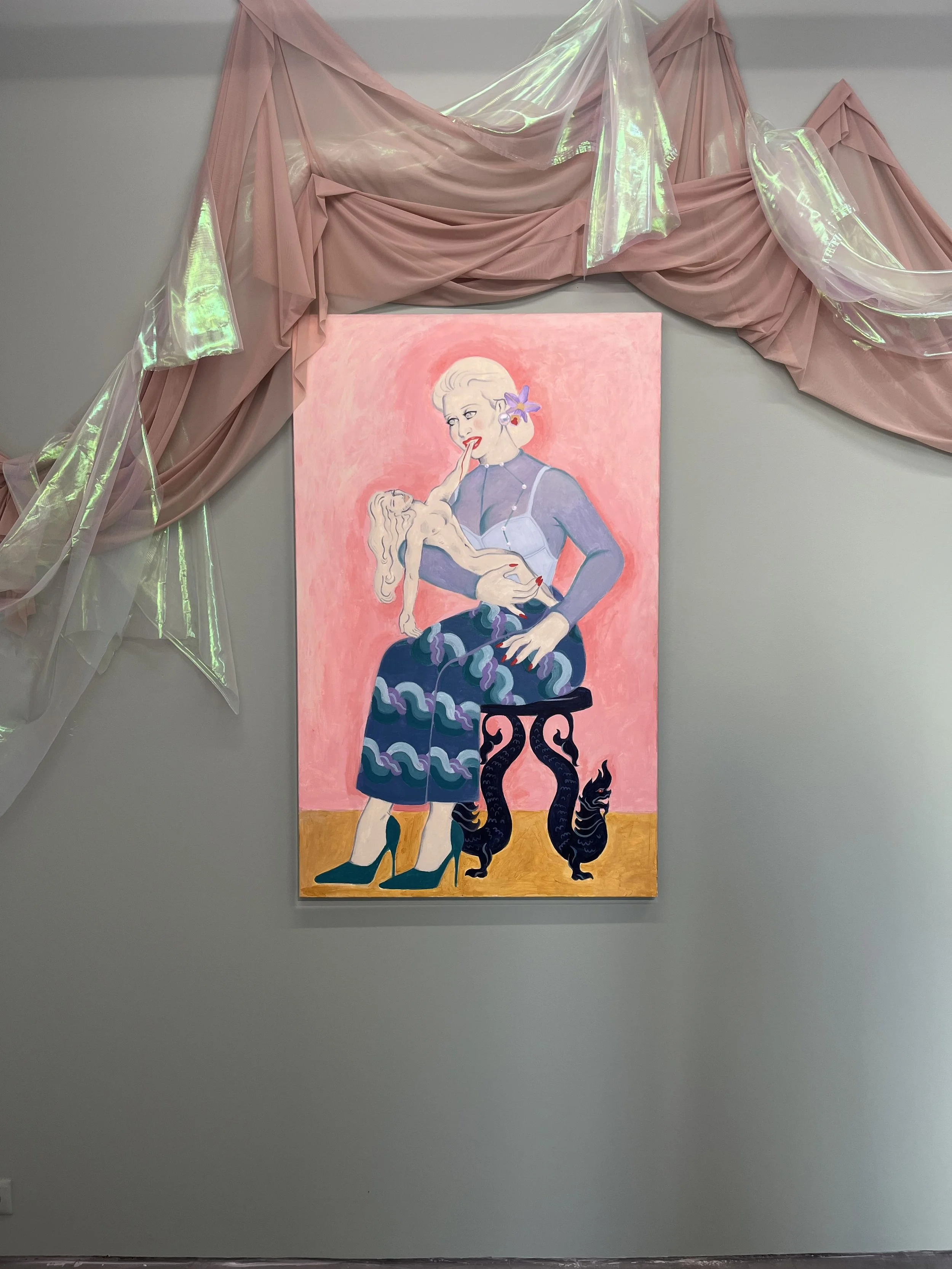
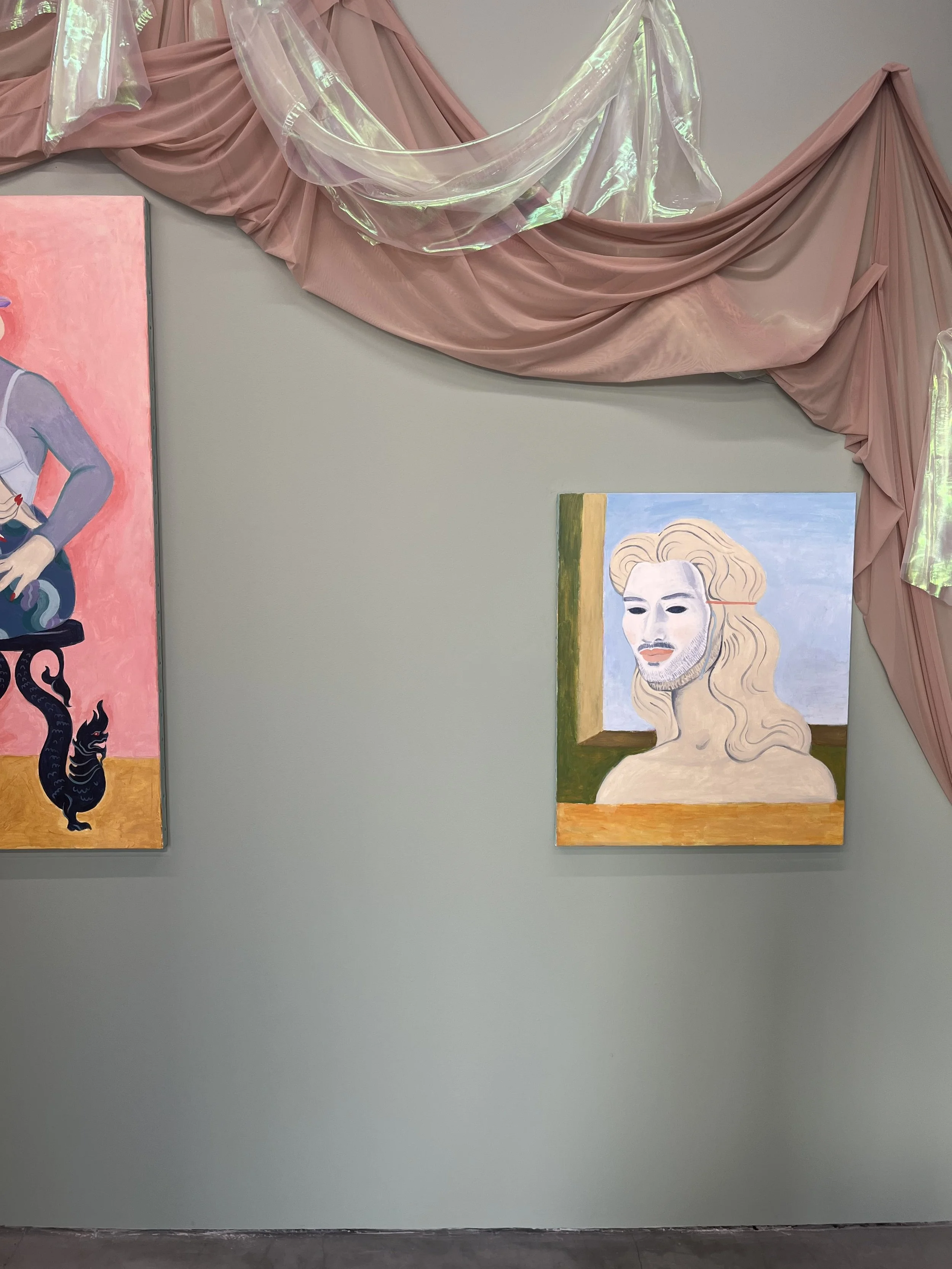
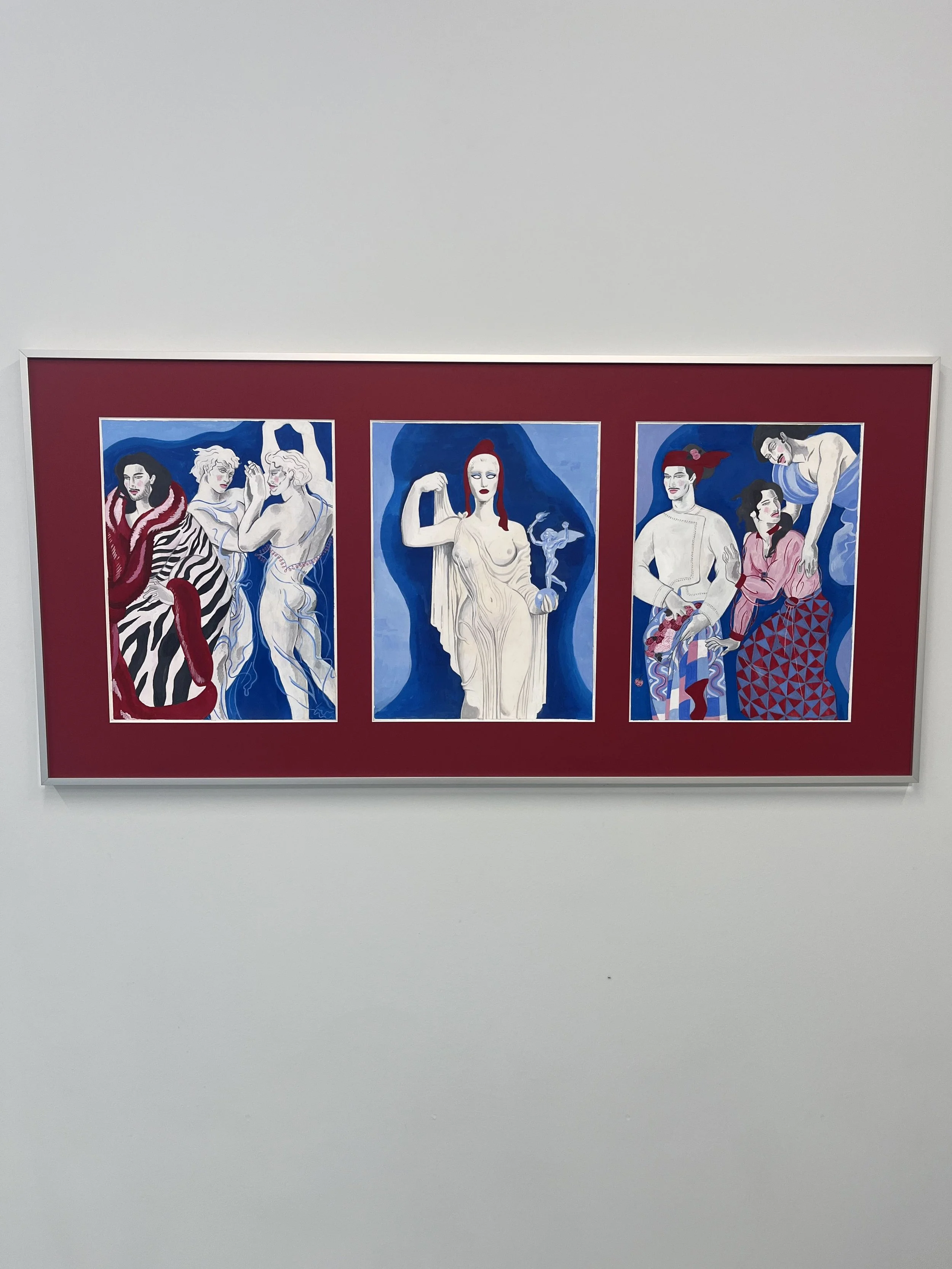
On my way home after buying groceries on my first day in Paris, I happened to pass a gallery. I had seen a painting through the window from across the street, and curiosity pulled me over the crossing and into Richie Nath’s exhibition An Oyster Without a Pearl.
The exhibition text opened with a quote by Gabriel García Márquez:
Human beings are not born once and for all on the day their mothers give birth to them, but life obliges them over and over again to give birth to themselves.
Richie Nath describes himself as having been born twice: first in Yangon, and then again in Paris. After leaving Myanmar following the coup in 2021, he has come to understand what it means both to create and to undo oneself.
The painting Mother Stands for Comfort alludes to Francisco Goya’s Saturn Devouring His Son. But here the violence is not mythological. Instead, it navigates the relationship shaped by care and control. Maternal love appears here as both protective and consuming: “a force that sustains while eroding the boundaries it once produced.”
In another work, Paris-site (parasite), he paints himself in doubled form: one being carried away by Zephyr while reaching toward a projected self that may never materialize.
Migration in his images never finds resolution, but lingers in a state of suspension. He seeks no solution, but allows himself to remain in a process that never completes itself. No pearl is formed. And yet, in its absence, life persists.
One might have imagined I would meet this exhibition through the role of the mother-to-be. But I felt so inverted, so turned backward toward that identity, that instead I experienced a strange doubleness: both as the child seeking its foothold, and as the mother shaping a child to come.
I had entered the gallery grieving a former self that could no longer carry me through this new experience. Like the astronaut who can no longer rely on old physics, where up and down become uncertain and there is no ground to push against. The old gravity had simply ceased. But the exhibition offered me images through which I could begin to formulate myself anew.
When García Márquez says that we give birth to ourselves over and over again, does he mean that we do not actively choose it?
For the new person is rarely born with the same certainty with which the old one lived. She is often born with hesitant and with the feeling that her hands and feet no longer quite know where the world begins. With waiting, uncertainty, and vulnerability.
In Barcelona, I grasped the world. In Paris, the world grasps me.
I thought of Jonna Bornemark’s concept of pactivity, a way of being active in one’s passivity. Perhaps pactivity means enduring the ways the world changes me. García Márquez says that we give birth to ourselves over and over again. Bornemark might add: and we cannot fully determine how that birth will unfold.
Because there is an expectation that the oyster’s irritation should produce a pearl, that suffering should produce wisdom, pregnancy maternal love and a sense of wholeness, migration a new identity, and grief strength, there is no room for an empty oyster. But Nath does not seem to say that he failed to create a pearl. Rather, that perhaps we have misunderstood what the oyster is.
There is a strong cultural expectation that pregnancy should be filled with immediate maternal love. Neither then nor now have I felt an overwhelming love for the coming child, nor longing. What I feel is waiting. At most, fascination, a kind of tension and curiosity.
I had searched through books, philosophy, poetry, and research articles for something that might reflect my experience, only to discover that within philosophy it is as though pregnancy has never happened. All our great thinkers, philosophers, existentialists, and phenomenologists were far more preoccupied with death than with birth. They were also men. And the few women who gained larger places in philosophy had themselves no experience of pregnancy.
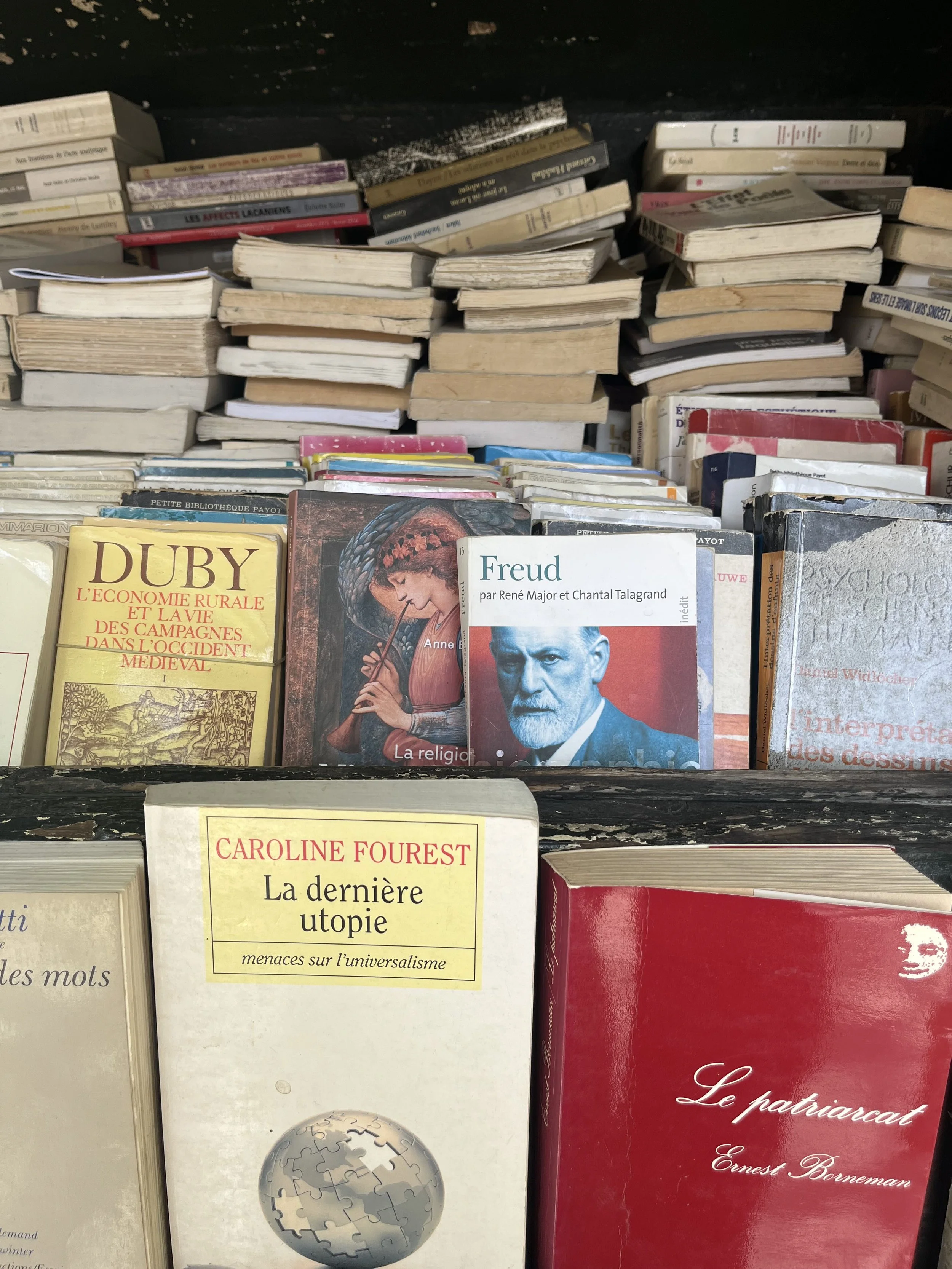
In my search for answers to my questions, it was not difficult to access the classics and the great recognized philosophers such as Freud and Descartes. Second-hand books were even visibly displayed on the Parisian bookstalls along the river Seine. Their worn edges and the smell of yellowed paper were, of course, deeply appealing, but I held them for a while only to remind myself that I had to find my experience reflected by someone and something else.
Many philosophical systems are built on the assumption that there is a stable center. Descartes has left us with a way of thinking in which the world consists of subject/object, I/you, and an inside/outside. But pregnancy responds that the self is not entirely bounded, that I have a certain inaccessibility to myself. It renders these boundaries porous. The body is not simply “mine,” and identity no longer feels stable. It gives rise to questions such as: is the fetus a part of me or another? Is the body a subject or an environment? It cannot be answered without being wrong in one direction or the other. It is an experience that changes even as one tries to understand it. Pregnancy reveals something that may always have been true, but which is usually easy to conceal: that we are never entirely separate.
One of the most central aspects is the confusion that arises in the sense that what is happening feels like another entity, and yet it is a movement that does not respond. My impulse is to speak to it, to understand it, and to create a relation to it. But it does not answer, because it is ultimately not a subject in that sense. A very strange connection emerges between standing outside and observing what is happening while simultaneously being within it. It happens inside me, yet it is not fully accessible and cannot answer back.
This double perspective breaks with the idea that experience is always either from within or from without. And if that is the case, what does it say about what an “I” is? Above all, I discover that this feeling is not shaped to be fully translated into thought. I suddenly become a self that does not always coincide with itself. Pregnancy then no longer becomes merely a “content” of my life, but something that exceeds my ability to fully make it my own.
The self as subject might be better described as a movement between states rather than as a fixed point. Unity does not exist prior to relation; it arises in the overlap and dissolves in separation.
The Dutch philosopher and professor Elselijn Kingma argues that attention in the literature has generally been directed toward the result of the pregnancy process rather than the process itself. She suggests that the absence, or minimal presence, of women philosophers within these disciplines has surely played a major role in the large gap left in philosophical reflection. Like the ultrasound image of the fetus as an astronaut in space, the mother and her subjective experience have been filtered out.
And if pregnancy functions as a disturbance in the very foundations of thought, then perhaps it is no surprise that it has remained so hidden in texts. It reveals not only an experience that is missing, but one that does not fit.
Because there is no real tradition of thinking through the experience of pregnancy, I suspect that this is also why it risks being simplified, romanticized, or, as in our books, almost entirely silenced.
If we turn to another major philosopher, Husserl, important to phenomenology, he writes:
The fusional relation of the pregnant mother with her baby could not be considered as an intersubjective relationship at all, since it lacks the specific experience of another as an empathetic experience.
Husserl means, roughly, that for me to encounter another person ethically, I must experience them as someone outside myself. I see their face, their actions, their suffering, and can feel empathy.
But the fetus is not outside. It is not an encounter between two separate individuals. The pregnant woman literally carries another human being within her body.
The philosophical consequence is greater than the biological one, and it raises questions such as: Where do I end and where does the other begin? Can a subject be partially permeable? Must ethics always begin with two separate individuals? If pregnancy shows that our boundaries are not so stable, has philosophy built its theories on an overly simplified image of the human?
Pregnancy is therefore not merely a new experience within the old worldview. It calls the worldview itself into question. It reveals that the human being has never been as bounded and self-sufficient as philosophy has wanted to believe. And this idea of being “something third” points, after all, to an experience that cannot be fully captured by the categories of one or two.
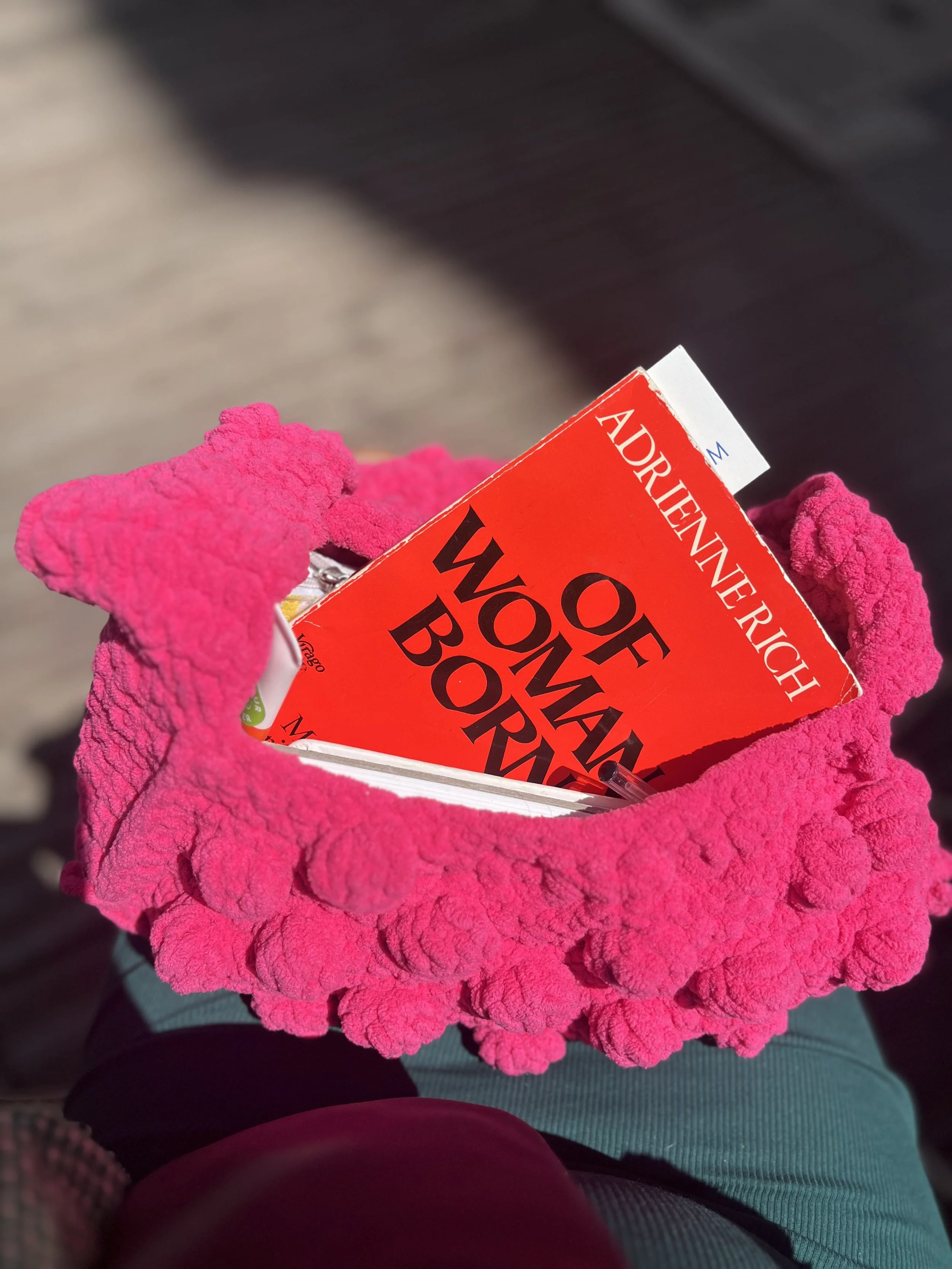
Adrienne Rich, in her book Of Woman Born, does not simply argue that Freud was wrong. She argues that the experience upon which he builds his theory is not universal. Freud’s model in On Negation is built upon clear boundaries: that there is an inside, an outside, and that the subject establishes itself by saying yes or no, by taking in or pushing away. The experience of pregnancy is not a “special case,” as though the interrelational existed there and then nowhere else. It simply happens that there, it becomes more radical.
We are shaped by our mothers, by language, love relationships, cultures, bacteria, animals, memories, and history. Pregnancy simply makes this entanglement impossible to ignore.
If pregnancy had been treated as a philosophical ground case rather than an exception, perhaps we would have inherited an ethics built more on mutual dependence than autonomy; a philosophy in which the subject is relational rather than isolated; a different understanding of time (cyclical, slow, and pactive); a different understanding of the body (permeable rather than closed); and a different understanding of reason (one that does not need to purify itself of the poetic and contradictory).
Like the astronaut, its relation to the world cannot be understood through Freud’s image of the self as surrounded by walls and gates. It exists within a gravitational field.
There is a blind spot in Western philosophy as a whole, and it is pregnancy. But what might have happened if philosophy had not begun with the solitary, self-sufficient individual, but with the pregnant body?
On a wall in Paris, not far from the gallery and Nath’s exhibition, someone had handwritten: Rage against capitalisme.
Against the backdrop of the art exhibition, it became almost impossible not to read this as a protest against the idea that every experience must yield something. That every irritation must produce a pearl. That suffering must produce wisdom, pregnancy maternal love, and grief strength.
But what happens if certain experiences are never completed? What if migration does not lead to a new home? What if pregnancy does not immediately lead to a stable identity as a mother? What if grief never fully crystallizes? Life is often less generous than that, isn’t it? Nath’s exhibition does not mourn the absence of the pearl. If it mourns anything, it mourns our belief that life must leave behind a pearl in order to have been real.
There are periods in life when no pearls are produced, when one slowly rebuilds the organism that may one day be able to carry them, or perhaps comes to discover that the pearl was never the point.
I walked home carrying the idea of pregnancy as a kind of migratory experience. Not merely as a biological transformation, but as an existential displacement in which one does not yet know what country one has arrived in.
With a grocery bag in my hand, the first signs of blisters on my feet, and a lump in my throat, I drifted home through the streets of Paris. Without quite knowing where the ground was, I kept walking.
That evening I could rest in the image of an empty oyster. I drew until I grew tired. Later, lying in the loft of the studio, I felt a small strike in my stomach. The movement of the fetus for the first time. A cold shiver ran through my body. I tapped back, receiving no answer, left with the strange feeling of what I would even have done if this intra-bodily and extraterrestrial presence had actually answered.
I lifted the blanket over my stomach, closed my eyes, and once again shaped myself into a question mark.